
A Walk Through Augusta: Memories, Traditions, and the Magic of The Masters
There are places in golf that feel important—and then there is the Masters Tournament.
I’ve been lucky enough to attend four Masters tournaments. Three visits came through my work with IBM, and one came courtesy of a friend whose wife was gifted tickets by her company back in 2000. However I got there didn’t matter. Once you step through the gates at Augusta National Golf Club, everything else fades away. Inside, you’re simply a golf fan walking through one of the most special places in the game.
My First Masters: The One That Hooked Me
My first visit was jaw-dropping. The immaculate grounds, the dramatic elevation changes that television never quite captures, and the pure magic of the Par 3 Contest all hit at once.
Like many great golf stories, it started with a phone call.
My friend Brian called me on April 1st and said his wife had received two tickets through her company and wondered if I wanted to go. I laughed and told him, “If you’re serious, call me back tomorrow—I’m not falling for an April Fool’s prank that easily.”
He called back the next day.
A week later, we were on our way.
We flew into Atlanta and, as any proper golf trip should begin, squeezed in a round at Eagle’s Landing Country Clubbefore driving to Augusta. Our tickets were for the Tuesday and Wednesday practice rounds—something I would later come to appreciate as one of the best ways to experience the Masters.
On Tuesday, we walked the course from end to end, at one point making it our mission to find a weed anywhere on the property. We failed. Completely.
We watched players hit multiple bunker shots, experimenting with trajectories and spin, and roll putts from every conceivable angle. And then there was the 16th hole, where players skipped balls across the pond to the delight of the crowd—a blend of skill, creativity, and pure fun that you don’t often see in major championship golf.
Wednesday brought the Par 3 Contest, one of the most joyful traditions in the game. We watched legends like Jack Nicklaus, Arnold Palmer, and Tiger Woods alongside a full field of great players, all chasing that elusive ace. That year, Pádraig Harrington won in a playoff over Eduardo Romero, but the real story was the atmosphere—families, laughter, and golf at its most human.
I’ve attended tournament rounds since then, but those first two practice days remain my favorite—less crowded, more revealing, and, for a true lover of the game, more fun.

The Weekend: Golf’s Greatest Reality Show
This year’s tournament reminded me why the Masters continues to captivate.
Rory McIlroy set the tone early, shooting 30 on the back nine Friday to take control. But Saturday brought the charge. Scottie Scheffler fired a 65. Cameron Young somehow made a 65 despite finding water on 15 from just 112 yards.
By Sunday, the leaderboard was stacked.
Then Augusta did what it always does.
An early double bogey by McIlroy on the 4th opened the door. Justin Rose briefly took the lead. Scheffler kept applying pressure with steady, bogey-free golf. Young burned the edges with putts that just wouldn’t fall.
But Rory steadied himself. After a missed birdie chance on the 9th, he settled in and played the back nine in one-under par—just enough to hold off Scheffler and win by a single shot.
The contrast was remarkable. McIlroy went 12-under over the first two rounds and even par on the weekend. Scheffler did the opposite—opening at even par before charging home in 11-under.
Two different paths. One unforgettable finish.
It’s the best kind of reality TV.

Where Every Hole Has a Name
One of the things that makes Augusta so memorable is that the holes don’t just have numbers—they have names.
“Tea Olive.”
“Pink Dogwood.”
“Golden Bell.”
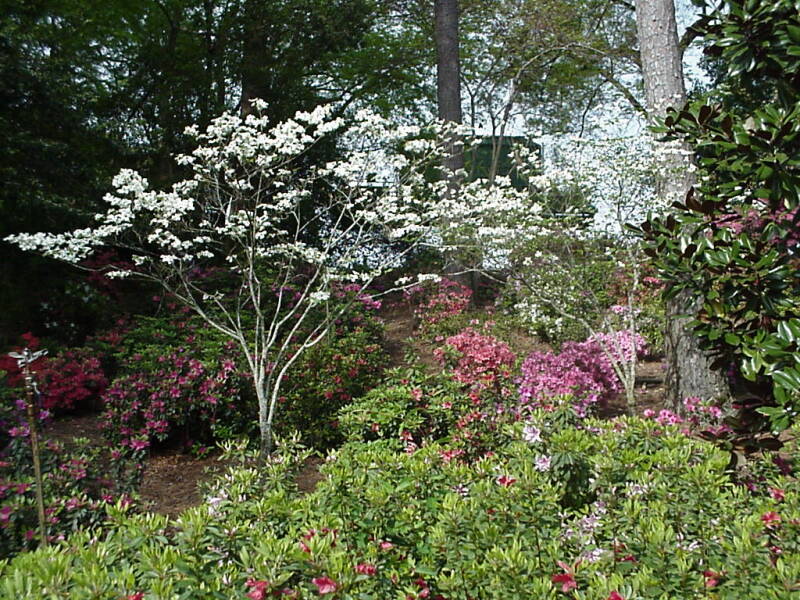
These names somehow fit the land, the moment, and the memory. The course is a canvas of azaleas, pine straw, and perfectly manicured turf. There are no weeds, no distractions—just beauty and intention everywhere you look.
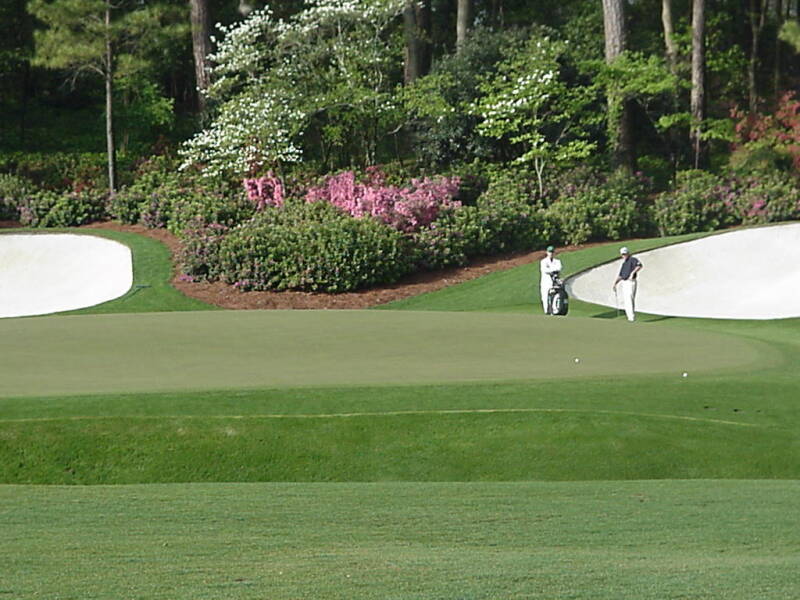
And yet, for all its perfection, the course invites creativity. There’s no heavy rough. Instead, players find pine straw beneath towering pines, opening the door to recovery shots that require imagination and nerve. It’s one of the few places where even a miss can lead to something extraordinary.
The Vision of Alister MacKenzie
Much of that brilliance traces back to Alister MacKenzie, the architect who, alongside Bobby Jones, shaped Augusta into what it is today.
MacKenzie believed golf should be both beautiful and strategic—a game of options rather than punishment. At Augusta, wide fairways encourage bold play, while the greens and bunkering demand precision and thought. The absence of heavy rough isn’t an accident; it’s an invitation.
His influence extends far beyond Augusta. Courses like Cypress Point Club, Royal Melbourne Golf Club, The Jockey Club and Pasatiempo Golf Club all reflect his philosophy—courses meant to be enjoyed as much as they are to be mastered.
Masters Traditions: The Prizes Beyond the Green Jacket
At Augusta, tradition matters. And while the Green Jacket is the most iconic symbol of victory, it’s only part of the story.
The Green Jacket, first awarded in 1949, represents entry into one of golf’s most exclusive clubs. Presented in Butler Cabin, it is worn by the champion for a year before taking its place permanently at Augusta National.
Another lesser-known prize is the gold medallion, first introduced after Ben Hogan’s 1951 victory. Crafted from 14-karat gold, it is engraved with the champion’s name and serves as a personal, lasting reminder of the achievement.
The low amateur is awarded the Silver Cup, a nod to both performance and promise—a glimpse of future greatness.
And then there is the Par 3 Contest, where the winner receives a crystal trophy. Played in a spirit of joy and tradition, it remains one of the most beloved—and charming—events in golf.
The Logo: A Subtle Statement
Even the Masters logo tells a story. The outline of the United States with a flag planted in Augusta reflects the tournament’s original ambition—to be America’s championship. For one week each year, the center of the golf world shifts to that small corner of Georgia.

Why It Never Gets Old
It’s been a long time since I last walked those fairways, but the theater of Augusta still gets me. I once thought that shifting the tournament to March might dull that unmistakable sense of spring, might take away some of the magic.
But it didn’t.
There is still something different about the Masters. Something that separates it from every other tournament in golf. Maybe it’s the traditions, maybe it’s the setting, or maybe it’s simply the way the moments seem to matter more there.
Whatever it is, it hasn’t faded.
If anything, it’s only become more special with time.
Add comment
Comments