After playing hundreds of courses across the U.S. and abroad, I’ve learned that architecture shapes enjoyment as much as condition or location. Nowhere is that clearer than when comparing Jack Nicklaus, Pete Dye, Bill Coore & Ben Crenshaw, and Tom Doak.
I’ve played multiple courses by each, and while I respect all four, my enjoyment level varies dramatically depending on the philosophy behind the design.
Jack Nicklaus: Precision, Power, and Consequences

Tee Shot at Coyote Springs, Las Vegas, NV
Few names in golf carry the weight of Jack Nicklaus. As a player, he defined greatness. As a designer, he left a global footprint that most golfers—especially those of us who travel—have stepped onto many times. In fact, his company has designed and built more than 410 courses worldwide. I’ve played a fair number of Nicklaus-designed courses over the years, and my feelings about them are… complicated.
Nicklaus courses tend to demand execution first and creativity second. Carries are real, misses are costly. Drives tend to favor a high fade and greens often require high, soft approaches into small landing zones. These are courses that reward ball-striking excellence — and expose anything less.
I’ve played about 40 Nicklaus designs, a few of them I really enjoyed. Others not so much. For example, four that I’ve played include:
- Nicklaus Course at Reunion Resort
- The Bear, in Grand Traverse
- Coyote Springs Golf Club near Las Vegas
- Traditions Club, in College Station
When you’re swinging well, these courses are championship-caliber. When you’re slightly off, they feel like survival exercises with penal hazards and impossible greens. Add in long green-to-tee transitions, and walkability is rarely part of the equation.
Pete Dye: The Mental Game on Steroids
Few names in golf architecture are as instantly recognizable as Pete Dye. He wasn’t a dominant tour player like Nicklaus, but as a designer, his about 200 courses have influenced modern golf architecture enormously. Dye courses are fixtures on professional tours and bucket lists alike, known as much for their visual drama as their psychological challenge. I’ve played several Pete Dye designs over the years, and while I admire his creativity and originality, my feelings about his courses tend to be… intense.
Pete Dye doesn’t just challenge your swing — he gets inside your head. Visual intimidation is central to his work: angled hazards, railroad ties, optical illusions, and forced decision-making off the tee.
A few of the Dye courses I’ve played include:
- The Hideaway Golf Club, LA Quinta, CA
- TPC River Highlands, Cromwell, CT
- TPC Sawgrass, Ponte Vedra, FL
- Paiute Golf Resort, Las Vegas, NV
- Austin Country Club, Austin, TX
Dye courses usually offer options — but they’re uncomfortable options. The bold line is obvious, the safe line feels awkward, and indecision is punished. I admire the originality, but I rarely walk off a Dye course feeling relaxed.
The Dye Course at The Hideaway, La Quinta, CA
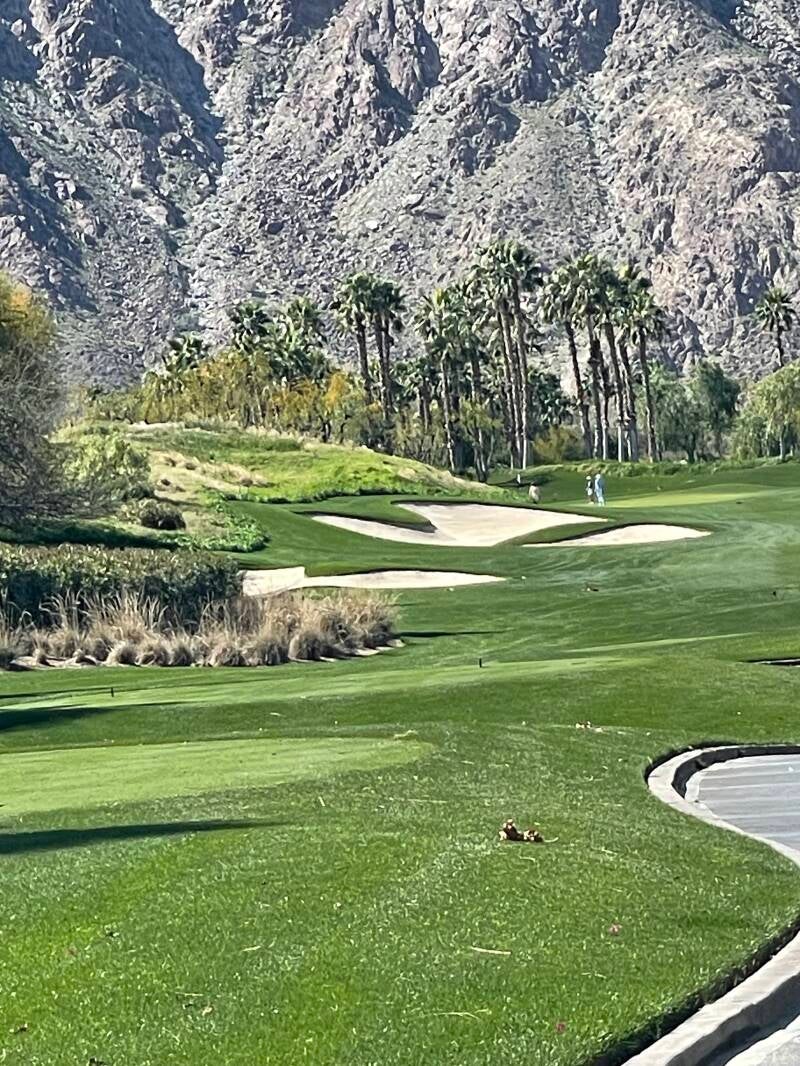
Coore & Crenshaw: Strategy, Subtlety, and Fun
Opening Tee Shot, Sand Hills, Mullen, NE

Few partnerships in modern golf architecture are as widely respected as Coore & Crenshaw. Unlike the high-profile, brand-driven design firms, their work is defined by restraint, subtlety, and a deep respect for the land itself. Rather than imposing a signature look, Coore and Crenshaw let each site guide the golf, producing courses that feel timeless rather than manufactured.
This is where golf starts to feel joyful and thoughtful. Coore & Crenshaw designs emphasize width, angles, and the use of natural landforms. You’re rewarded for thinking your way around the course, not just executing perfect shots.
I’ve had the pleasure to play about 15 Coore & Crenshaw courses including:
- Sand Hills Golf Club, Mullen, NE
- Austin Golf Club, Spicewood, TX
- Cabot Cliffs, Nova Scotia, Canada
- Bandon Trails, Bandon, OR
- Sand Valley Golf Resort, Sand Valley, WI
Coore & Crenshaw courses reward creativity, allow recovery, and almost always walk beautifully. You can play them repeatedly and find new ways to attack familiar holes. When you score well, it feels earned — and when you don’t, it rarely feels unfair.
Tom Doak: Freedom, Width, and Replay Value
Few modern architects arrived on the golf design scene as unconventionally as Tom Doak. His book, The Anatomy of a Golf Course, helped catapult him into the architectural spotlight long before he had a large portfolio of built work, challenging conventional wisdom and advocating for strategic design rooted in the land. When his courses began to appear, they reflected those ideas clearly—wide fairways, thoughtful angles, imaginative greens, and an emphasis on choice rather than force.
Tom Doak shares much of the Coore/Crenshaw DNA but often adds a slightly sharper strategic edge. His courses look informal and wild, yet they’re deeply sophisticated once you learn where to miss — and where not to.
Doak courses I’ve played include:
- Cape Kidnappers, Napier, New Zealand
- Pacific Dunes, Bandon, OR
- The Loop at Forest Dunes, Roscommon, MI
- The Rawls Course, Lubbock, TX
Doak courses ask, “What shot do you want to play?” rather than “Can you pull this off?” Width encourages boldness, greens reward imagination, and recovery is possible with the right idea. They get better every time you play them.
Tee Shot at Pacific Dunes, Bandon, OR

Final Take
All four architects are masters — but they speak to different golfers.
- Nicklaus rewards precision and power
- Dye challenges nerve and decision-making
- Coore & Crenshaw reward strategy and feel
- Doak celebrates creativity and freedom
For my game (5-10 handicap) — and my enjoyment — Coore/Crenshaw and Doak consistently leave me wanting another round, convinced I could play them better—or at least differently—the next time. Who's your favorite architect? Leave me a comment below!
Add comment
Comments
Good take on these four architects. Like you, I have always thought the Jack Nicklaus courses demanded precise shot making and not much forgiveness, especially around the greens. Being from Kentucky, I have played Valhalla, and while a PGA and Ryder Cup Venue as well as a future Solheim Cup course, I didn’t come away as wanting to play the course again. I have also played Turtle Point at Kiawah Island and wasn’t impressed at all given the difficulty. Pete Dye courses have always intrigued me for the routing and the layout. I have played Kiawah Ocean Course and Atlanta National, and I really liked both, but you are right there are some shots that can make you uncomfortable. I am playing all three Paiute courses in a couple of weeks and looking forward to seeing his routing in the desert. For Coore and Crenshaw, I have really liked Bandon Trails for the change from the other Bandon Courses off the course. The beauty and routing of that course was really strong. Sheep Ranch was great but played it in rain and wind and couldn’t get the full experience but 16 and 17 were incredible golf holes. Tom Doak, as you say is an interesting guy. I liked Pacific Dunes but didn’t care for Old MacDonald. His flair for the rough edges goes sometimes too much, but I do like the strategy he presents. Old Mac was probably too much template of CB and Seth Raynor, but that is why they did it and I felt it got a little boring after awhile. Don’t know if you have played Arcadia Bluffs in Michigan, but their South Course by Dana Frye as resemblance of Chicago Golf Club is a really fun course to play but challenging. Anyway, look forward to your future blogs and will look into your books. I do have Tee To Green.
Thanks, Rob! I appreciate you buying the Tee to Green Book! I have not played the South Course at Arcadia, but I hope to in the near future. You'll have a wonderful time at Paiute, I've played there several times and really enjoy those courses.