Why a great golf course and a great day of golf aren't necessarily the same thing
Golfers love rankings.
We rank courses, resorts, architects, players and holes. We debate Top 100 lists as though moving a course from No. 17 to No. 23 constitutes a national emergency.
After playing hundreds of courses around the world, however, I've discovered a problem with rankings:
The best course isn't always my favorite course.
Ask me which is the better golf course and I might choose one. Ask me which one I'd like to play again tomorrow, and you may get an entirely different answer.
The Intellectual and the Emotional
Jonathan Cummings offered an interesting way to think about this in his book The Rating Game. He suggested that the ingredients of golf-course greatness can broadly be divided into two categories: intellectual and emotional.
The intellectual side challenges your golf game. A good course asks you to hit different shots—draws and fades, high and low, long and short, uphill and downhill. Some approaches require a forced carry while others invite you to run the ball onto the green. Risk/reward holes make you decide how much trouble you're willing to accept for the possibility of a better score.
Variety matters. Ask me to hit the same shot eighteen times and eventually I'm going to get bored, no matter how difficult the course is.
Then there is the emotional side.
It's the ocean suddenly appearing behind a green. Dramatic changes in elevation and color. A beautiful old tree framing a shot.
It's an eagle circling overhead.
Swans floating down a river.
Sheep wandering through the rough.
Kangaroos bouncing across a fairway in Australia.
None of those things has anything to do with whether I shoot 75 or 85. But they have an enormous influence on whether I remember the round ten years later.
And, of course, conditioning matters. Golf is simply more pleasurable from beautifully maintained fairways and greens that roll exactly where you hit them.
The greatest courses combine all of these ingredients.
But I'm beginning to realize that my favorite courses lean a little more heavily toward the emotional side.
Great Doesn't Necessarily Mean Fun
I don't need a golf course to beat me up to appreciate it.
Royal County Down, Pinehurst No. 2 and Whistling Straits are unquestionably great golf courses. Their ability to challenge the best players in the world is part of what makes them exceptional championship venues. These courses are incredibly difficult for me.
I'm not playing in the U.S. Open or the Ryder Cup.
I'm playing golf with my friends.
Give me a course where I can hit driver on one hole and something less on the next. Let me work a ball left or right, flight an iron under the wind, run one onto a green and occasionally take a chance because the reward is worth the risk.
Give me enough trouble that a good round feels earned.
Just don't make every hole feel like an examination.
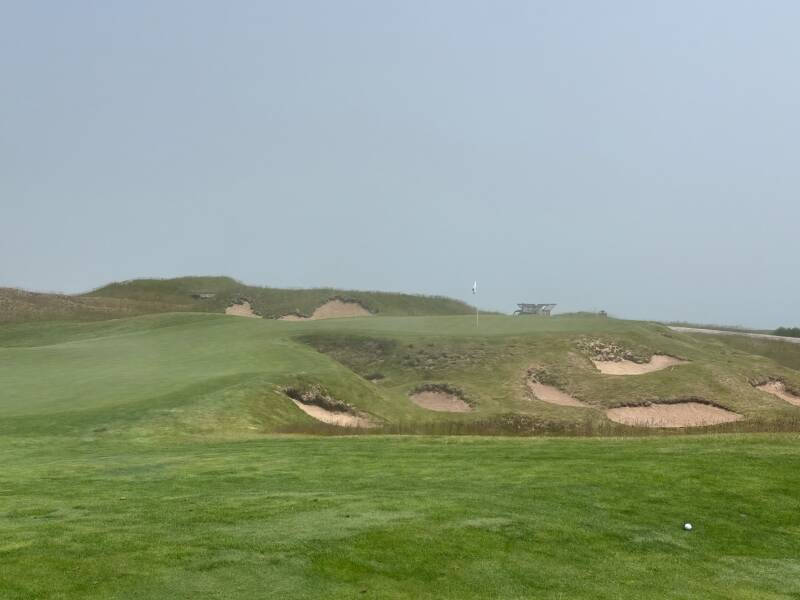
Our recent trip to Kohler brought this home. I believe Whistling Straits is Pete Dye's masterpiece. The scale, bunkering and shot demands are extraordinary. Even from about 6,400 yards, however, it was simply too much golf course for me that day.
A couple of days later, I played the River Course. Eagles soared overhead, swans floated in the water, the conditioning was spectacular, and the course asked me to hit plenty of interesting golf shots without beating me up.
I also played well.
There is, after all, one highly sophisticated course-rating criterion Jonathan Cummings may have overlooked:
I tend to like golf courses considerably more when I play well.
The Straits was the greater course.
The River was my favorite.
And I've discovered that's hardly the only time this has happened.

| The Best Course | My Favorite | Why I'd rather play it again |
|---|---|---|
| Whistling Straits | Blackwolf Run River Course | The Straits is Pete Dye's masterpiece, but the River gave me variety, spectacular conditioning, eagles overhead, swans on the water—and more fun. |
| Royal County Down | Ardglass | RCD is an architectural masterpiece, but Ardglass has the castle, cliffs, quirky holes and a personality that grabbed me from the first tee. |
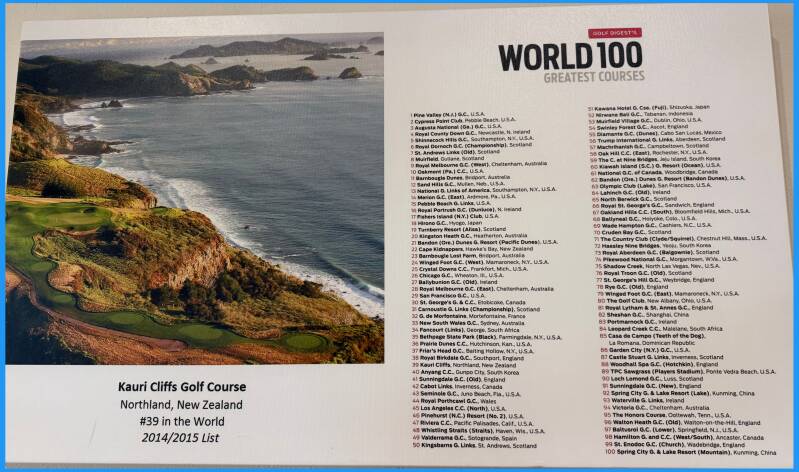
| Cape Kidnappers | Kauri Cliffs | Cape Kidnappers is spectacular from the air; Kauri Cliffs gave me more "wow" moments while actually playing the course. |
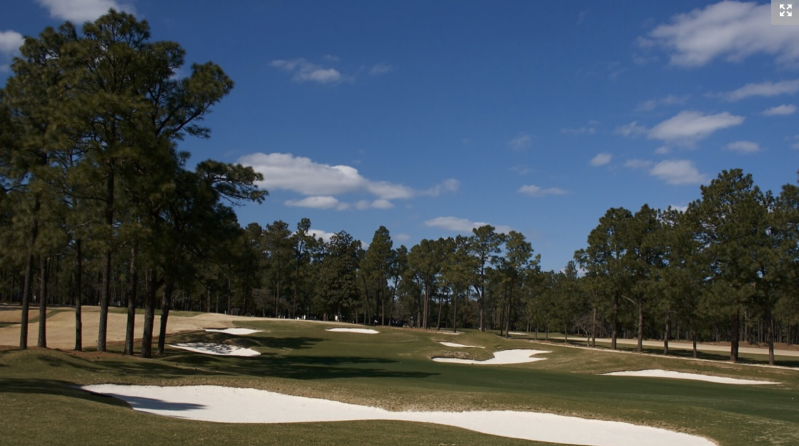
| Pinehurst #2 | Pinehurst #4 | No. 2 is one of America's great championship tests. No. 4 gives me more opportunities to hit different shots without feeling beaten up for four hours. |
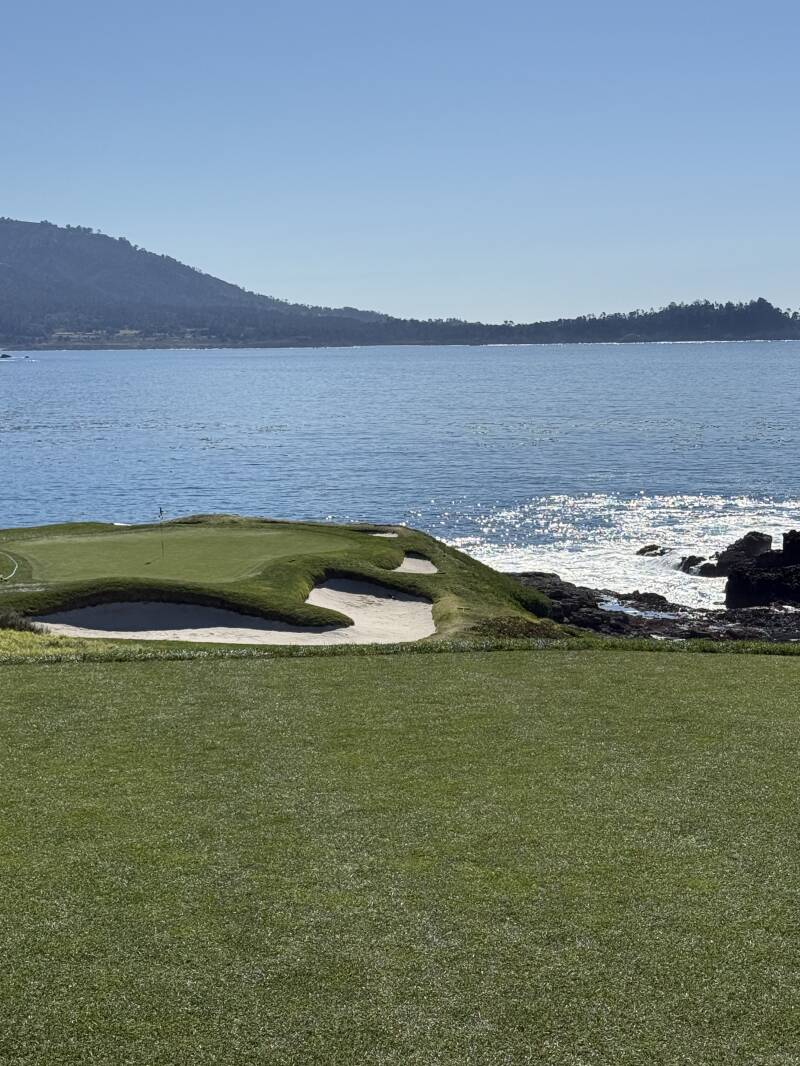
| Pacific Dunes | Bandon Dunes | Pacific Dunes may be the architectural darling, but Bandon gives me spectacular ocean holes, variety, playability and a course I'd happily walk again tomorrow. |
There is a pattern here.
The course I admire the most isn't necessarily the course I love the most.
Royal County Down may be the greater golf course, but Ardglass gave me a castle clubhouse, spectacular cliffs, quirky holes and one of those golf experiences I still find myself talking about.
Cape Kidnappers produces photographs that almost don't look real. Yet standing on the golf course, I preferred Kauri Cliffs. The ocean views seemed to reveal themselves throughout the round rather than needing a drone to fully appreciate them.
And sometimes the distinction isn't about difficulty at all. Pacific Dunes and Bandon Dunes are both wonderful. Architecture aficionados may give the edge to Pacific Dunes, and I understand why.
But hand me two tee times for tomorrow morning and I'm heading to Bandon Dunes.
An architect or course rater can explain why one course is technically superior, but he can't tell me which one makes me happiest.

Maybe I've Been Asking the Wrong Question
Perhaps when I was younger I placed more value on surviving difficult golf courses. There is satisfaction in walking off the 18th green of a championship course knowing you've been tested.
I still appreciate that.
But these days, give me a course where I can play with friends, hit a bunch of different shots and watch the wildlife enjoy the property right alongside us.
Give me interesting architecture, beautiful scenery and great conditioning. Give me a little risk and reward. Give me enough challenge that pars feel good and birdies feel special.
And give me a reasonable chance of walking off the 18th green smiling.
I'd much rather shoot 76 on a course that entertained me for four hours than shoot 85 on a championship monster and announce afterward:
"Boy, that's a great golf course."
Because great, favorite and fun aren't synonyms.
A course can be great because of its architecture and intellectual challenge. It becomes a favorite because of the emotional connection we make with it.
And fun?
That's the magical combination of interesting golf, beautiful surroundings, a few shots worth remembering and, most importantly, the people sharing the day with you.
I've spent years trying to decide which are the best golf courses I've played.
Maybe I've been asking the wrong question.
At this point in my golfing life, I'm much more interested in another one:
Which course would I most like to play again tomorrow?
That's a different list.
And increasingly, I think it's the one that matters.
After all, 90% of golf is who you play with.

Add comment
Comments