I've played hundreds of golf courses over the years, and occasionally I'll think about one I'd like to play again—only to remember that I can't. The course is gone.
Some were important, some were quirky, and none of these five would likely appear on anyone's list of America's greatest golf courses. But looking back, I've realized that they mark very different periods of my golfing life. From a summer when I was 16 to golf trips many years later, each gave me something worth remembering.
Golf courses come and go. Fortunately, the stories have a much longer shelf life.
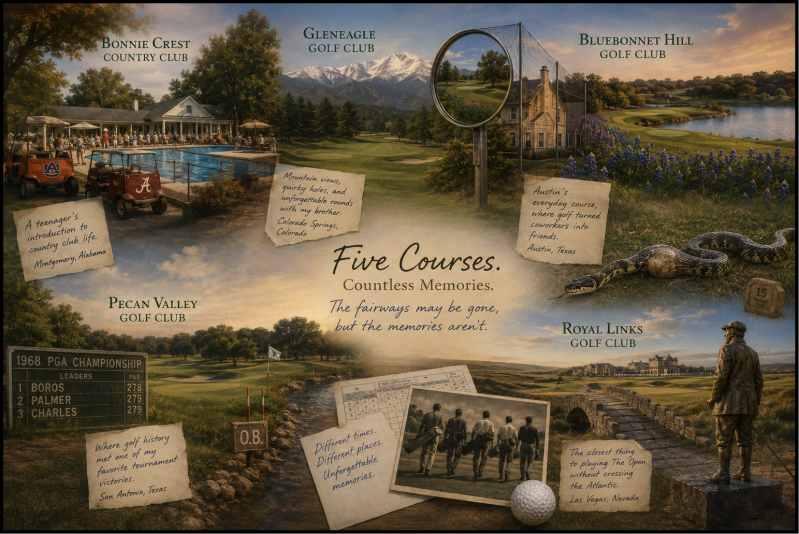
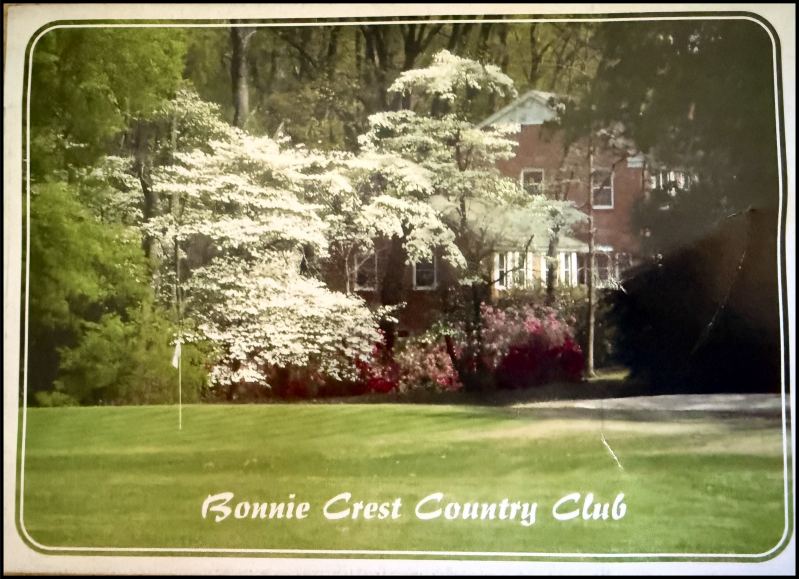
Bonnie Crest Country Club (1940–2013)
Montgomery, Alabama
A teenager’s introduction to country club life
When I was 16, I spent several weeks of my summer with my brother in Montgomery, Alabama. We played Bonnie Crest Country Club almost every day, and to a teenager who loved golf, the place seemed like something straight out of Caddyshack.
The pool was packed, the golf course was busy, and colorful characters buzzed around in golf carts decorated in either Alabama crimson or Auburn orange. It felt less like a country club and more like the center of the universe.
Bonnie Crest was a traditional parkland course with a couple of good holes, but that's not really why I remember it. I remember being 16, playing golf every day with my brother or niece and having nowhere particularly important to be except the first tee the next morning.
Many years later, Bonnie Crest became part of our family's story again when my brother and sister-in-law celebrated their 50th wedding anniversary there. The club that had been the setting for one memorable summer of my youth was still there for one of the great milestones of their lives.
Bonnie Crest closed on September 30, 2013, after more than 70 years.
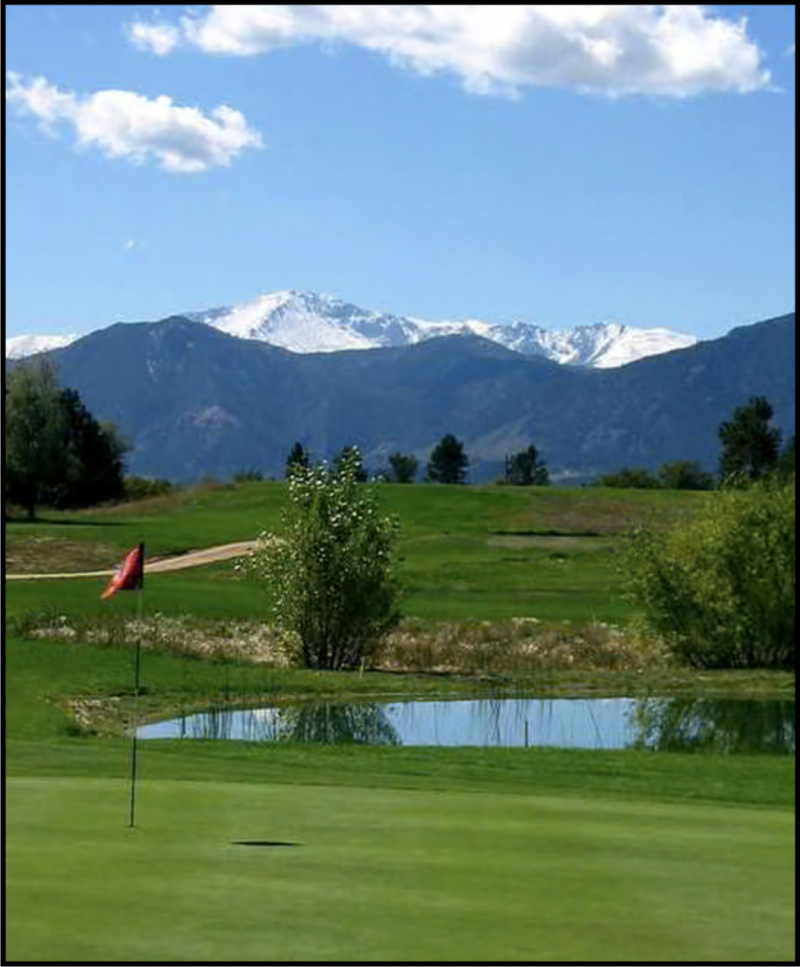
Gleneagle Golf Club (1974–2013)
Colorado Springs, Colorado
Mountain views, quirky holes, and unforgettable rounds
Gleneagle wasn't famous, but it never needed to be. Another of my brothers and I played it several times in the early 1990s. The setting beneath Pikes Peak was spectacular, with wonderful views of Colorado's Front Range, and the pace of play always seemed relaxed.
What I remember most, though, were the quirks.
One dogleg right had a house sitting in precisely the wrong place. An enormous protective net stood in front of it, but apparently the net wasn't quite enormous enough. Throughout the round, you could hear the occasional unmistakable "thud" of another golf ball finding the poor house.
Several holes were blind, including one with perhaps the most unusual piece of golf-course equipment I've encountered: a giant mirror mounted behind the tee. Instead of waiting for a bell to ring, you looked in the mirror to see whether the group ahead had cleared the fairway.
It wasn't fancy. It was just fun.
Today, Gleneagle is gone, but whenever I see the Air Force Academy North exit off I-25, a quick glance to the east reminds of the course and those rounds with my brother.
Bluebonnet Hill Golf Club (1991–2019)
Austin, Texas
Austin’s everyday course, where golf turned co-workers into friends
When I moved to Austin in 1996, Bluebonnet Hill became one of the first places where golf helped make a new city feel like home.
I joined the IBM Golf League, a two-person net best-ball league that played nine holes on Wednesday evenings. Over several summers, I partnered with John Rollman and Penny Forrest (Gardner) and met wonderful people from parts of IBM I might otherwise never have known. Wednesday-night golf became as much about the people as the scorecard.
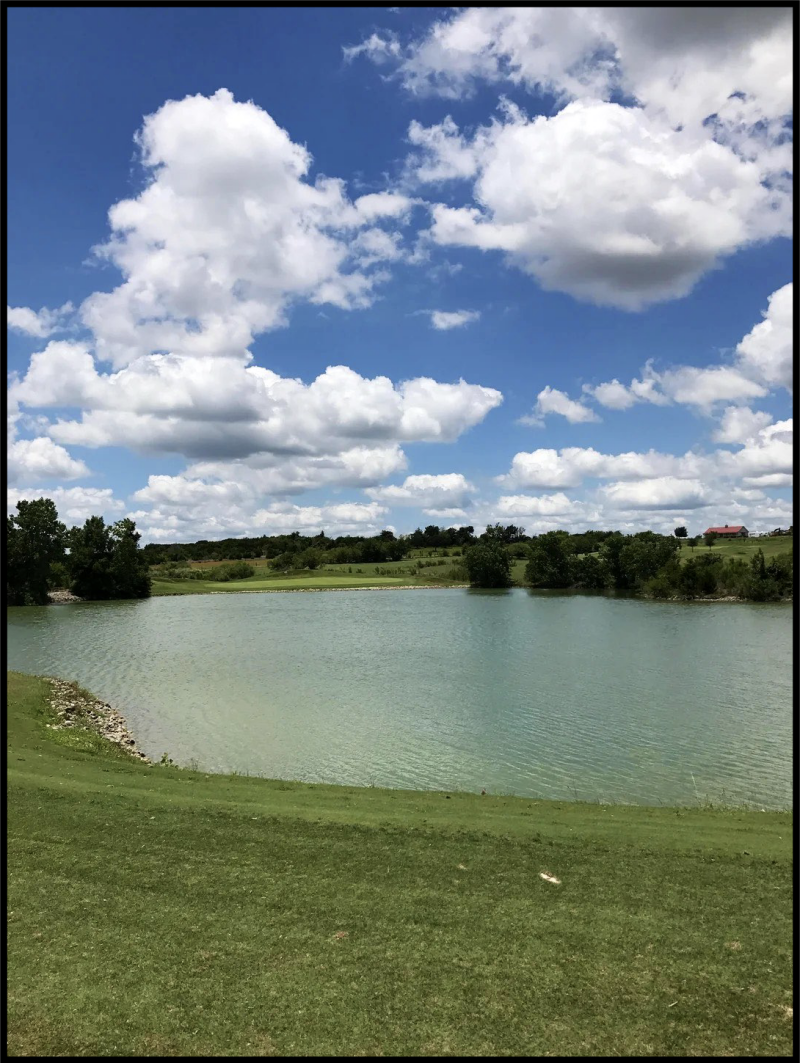
Bluebonnet was also simply a fun place to play. The driving range overlooked Decker Lake, and the course featured unexpected elevation changes, doglegs, plenty of water and enough wind to make club selection interesting. It was affordable, the service was good, and the pace of play was usually excellent. Every Labor Day, some of the best players in the Austin area showed up for its annual tournament.
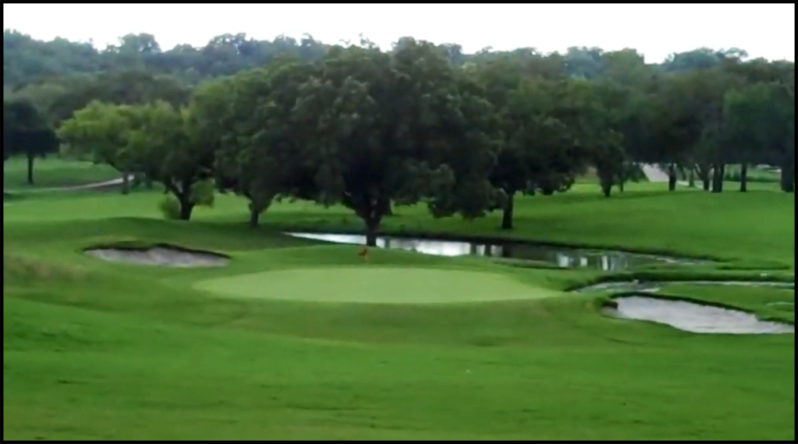
The closing stretch included two of my favorite holes. The 16th was a terrific par 4 with a pond running along the right side near the green. The 17th used the same pond for the course's signature hole—a roughly 200-yard par 3 requiring an all-carry shot over the water.
But my most vivid Bluebonnet memory may have nothing to do with golf.
One evening we arrived at the 15th tee to find an enormous Texas king snake stretched between the tee markers. There was a substantial lump in the middle of him, presumably an unfortunate rabbit that had recently become dinner.
We quietly moved to the front of the tee box and played from there.
Even in a golf league, some things aren't worth playing from the proper tees.
Bluebonnet Hill closed in 2019. When I think about it today, I don't really think about the scorecards. I think about Wednesday evenings, new friendships, summer golf after work—and one very well-fed snake.

Pecan Valley Golf Club (1962–2012)
San Antonio, Texas
Where golf history met one of my favorite tournament victories
Pecan Valley was a place where golf history felt close enough to touch.
The clubhouse still displayed the scoreboard from the 1968 PGA Championship, where 48-year-old Julius Boros defeated Arnold Palmer and Bob Charles by a single stroke. Palmer's dramatic finish became part of Pecan Valley lore, and the old scoreboard remained a wonderful reminder that some of the greatest players in the game had once walked those same fairways.
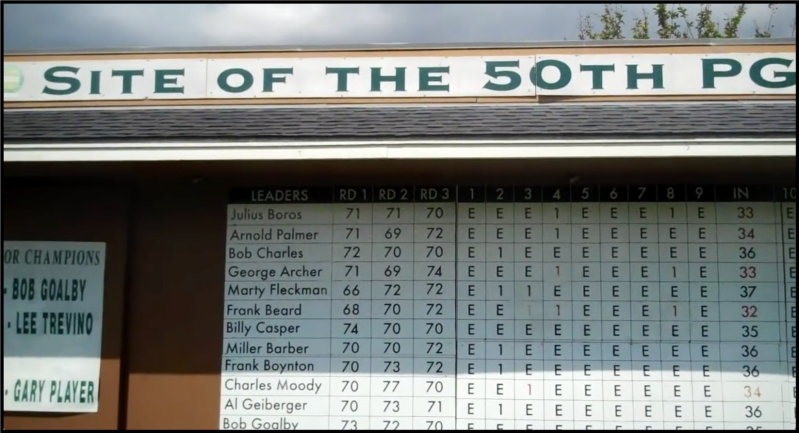
My connection to Pecan Valley was considerably less historic—but much more personal.
In 2001, shortly after the course hosted the U.S. Amateur Public Links Championship, I played in a tournament there. Pecan Valley was in fantastic condition, and I was fortunate enough to win.
One of the course's great quirks played a role.
The 9th hole featured on-course out-of-bounds, an unusual hazard that didn't look particularly intimidating until you watched what it could do to a golfer's scorecard. Two players who were considerably better golfers than I was had a difficult time keeping their tee shots in play there. I managed to stay out of trouble.
Sometimes golf rewards great shots. Sometimes it rewards simply keeping the ball between the stakes.
Pecan Valley eventually closed in 2012. Whenever I see a photograph of that old 1968 scoreboard, I'm reminded of Palmer and Boros—but also of one of my own favorite tournament victories.
Royal Links Golf Club (1998–2021)
Las Vegas, Nevada
The closest thing to playing The Open without crossing the Atlantic
Las Vegas has never been shy about recreating famous places, and Royal Links carried that philosophy onto the golf course.
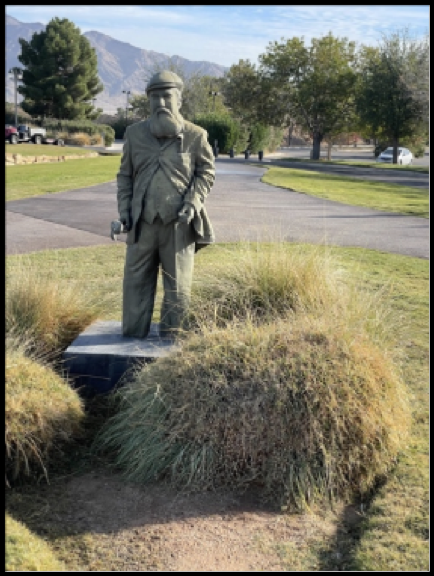
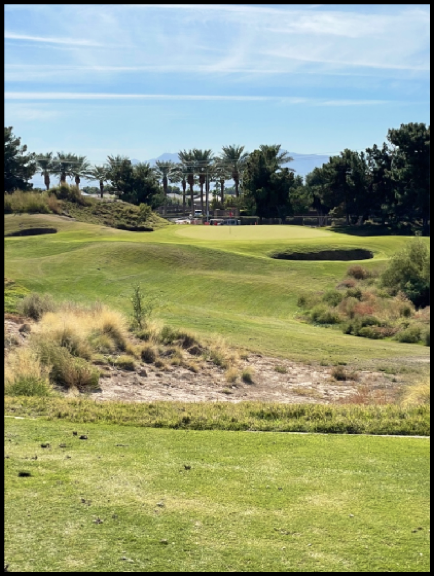
Instead of another desert layout, Royal Links celebrated The Open Championship with 18 holes inspired by St. Andrews, Royal Troon, Carnoustie, Royal Birkdale, Royal Liverpool and other legendary courses of the British Isles. Pot bunkers, heather, firm fairways and an Old Tom Morris statue greeting you at the clubhouse helped complete the illusion.
My favorite was Royal Troon's famous Postage Stamp, which played as the 8th hole. There's nowhere particularly good to miss that little green. The real Postage Stamp has tormented some of the finest golfers in the world during The Open. I managed to make double bogey without the benefit of Scottish wind or rain.
There was also the Road Hole from St. Andrews, complete with a wall and Road Hole Bunker, and a version of the Old Course's 14th with its infamous Hell Bunker. Royal Links wasn't an exact replica of Scotland or England, nor was it trying to be. It was simply a wonderfully entertaining tribute to links golf.
Royal Links closed in 2021. Of all the Las Vegas courses I've played, it remains the one whose personality I miss the most.
The Fairways Are Gone. The Memories Aren't.
Golf courses have lifespans, just like everything else. Fairways become neighborhoods, clubhouses disappear, and places where we once knew every bunker and dogleg eventually exist only in photographs and memories.
When I think about Bonnie Crest, Gleneagle, Bluebonnet Hill, Pecan Valley and Royal Links, I remember much more than golf—the brothers I played with, new friendships, a tournament victory, a snake on a tee box, a house being peppered with golf balls, and plenty of laughter along the way.
I wouldn't trade those memories, but I don't need to go back and recreate them either. Part of the joy of golf has always been discovering what comes next: a new course, a different personality, another group of people, and perhaps another lesson I didn't know I needed.
These five fairways may be gone, but the journey isn't over. The next wonderfully quirky place might be waiting on tomorrow's scorecard.
Add comment
Comments
Those were fun times, George! I felt so at home at Bluebonnet... wish we could take a quick trip back in time and play her once again!