What happens to your golf game when you play two courses separated by nearly 10,000 feet of elevation? Laurie and I decided to find out.
There are plenty of ways to build a golf bucket list. Play all 50 states. Play every course that has hosted a major. Chase the great architects. Or, in our case, occasionally find something just because it sounds interesting.
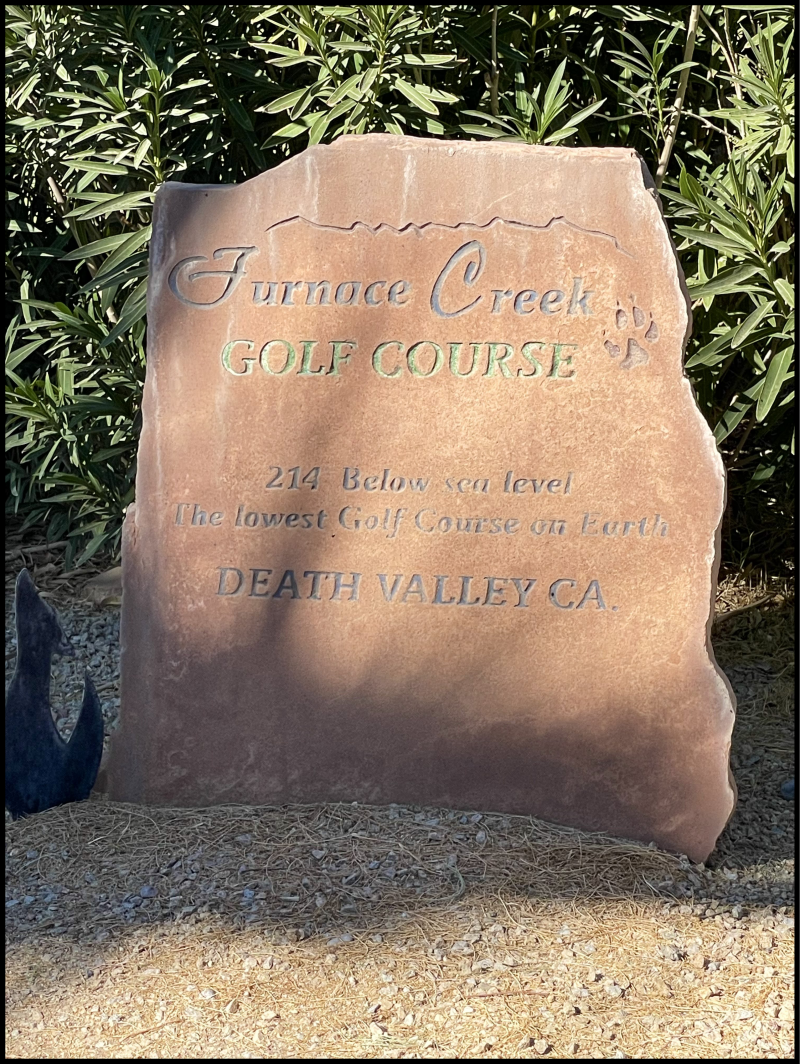
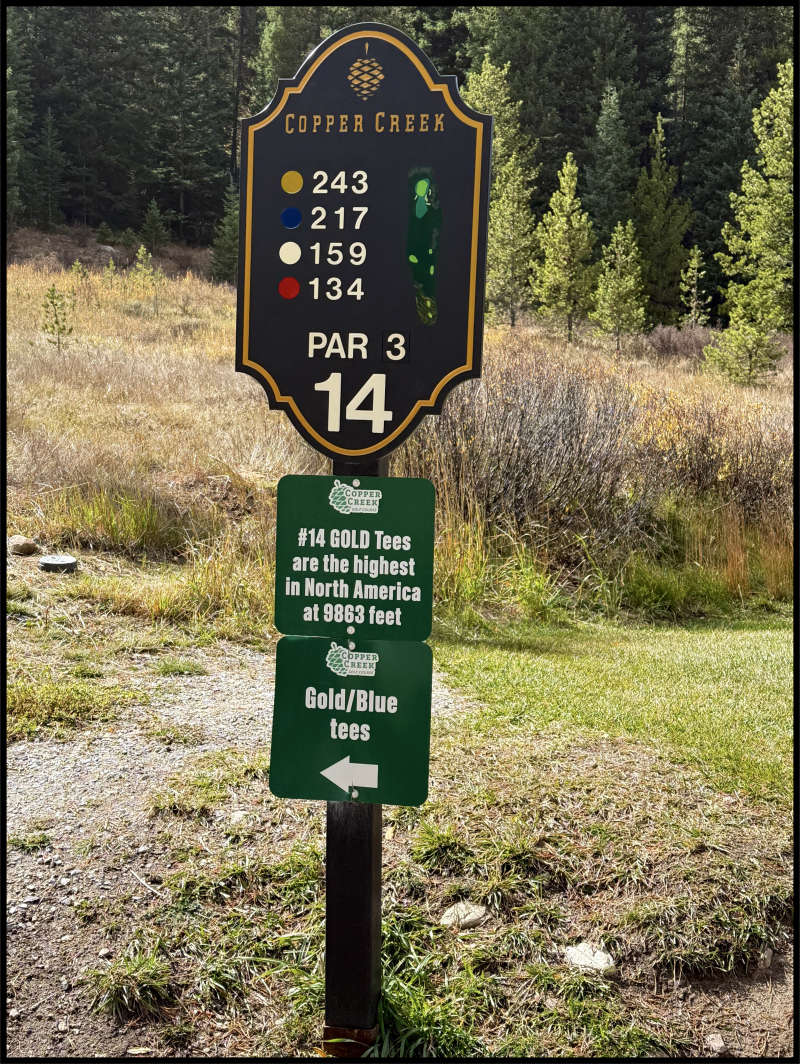
That is how we ended up playing two of the most geographically extreme golf courses in America: Furnace Creek Golf Course in Death Valley, California, at 214 feet below sea level, and Copper Creek Golf Course at Copper Mountain, Colorado, where the course climbs to roughly 9,800 feet above sea level.
One sits in the middle of the desert. The other doubles as a ski resort.
And your golf ball definitely knows the difference.
Going Low: Furnace Creek
We played Furnace Creek just before Thanksgiving in 2024. We flew into Las Vegas and made the roughly two-hour drive into Death Valley.
When Laurie and I arrived, we discovered something that almost never happens in golf: we had the entire course to ourselves.
Just the two of us.
On the second hole the superintendent drove up to us and said, “We have a tree down on 14, we should have it removed before you guys get there.” This never happens at a crowded daily fee course or even a posh country club…
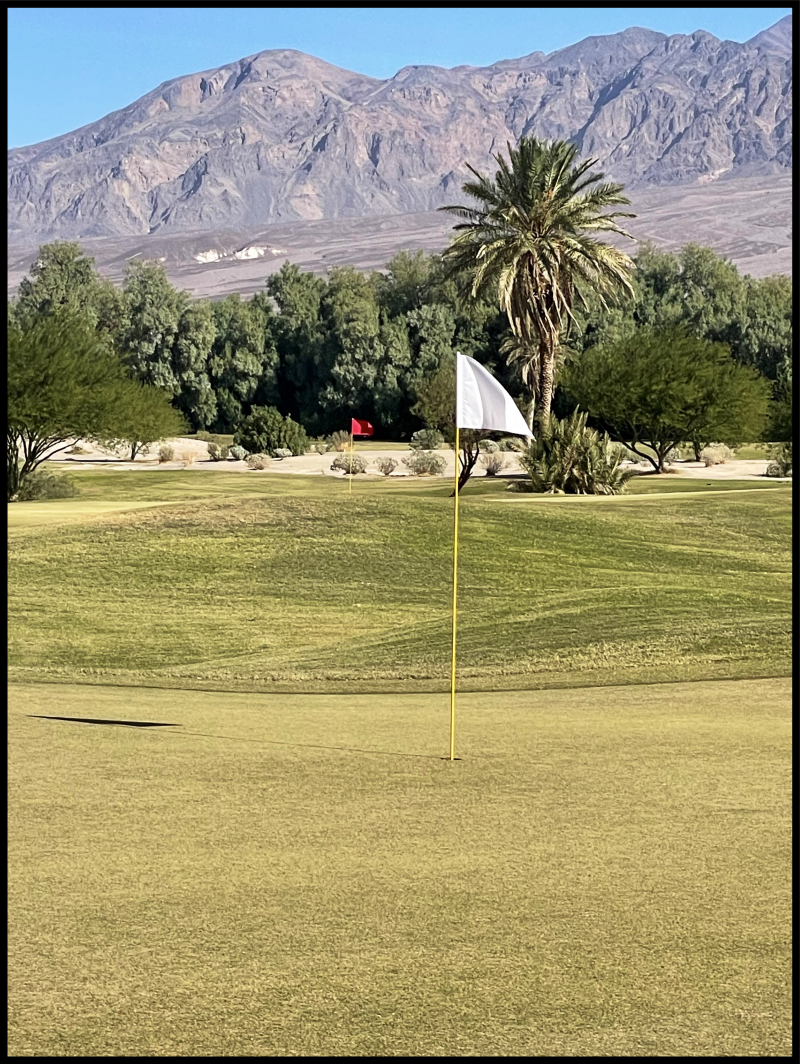
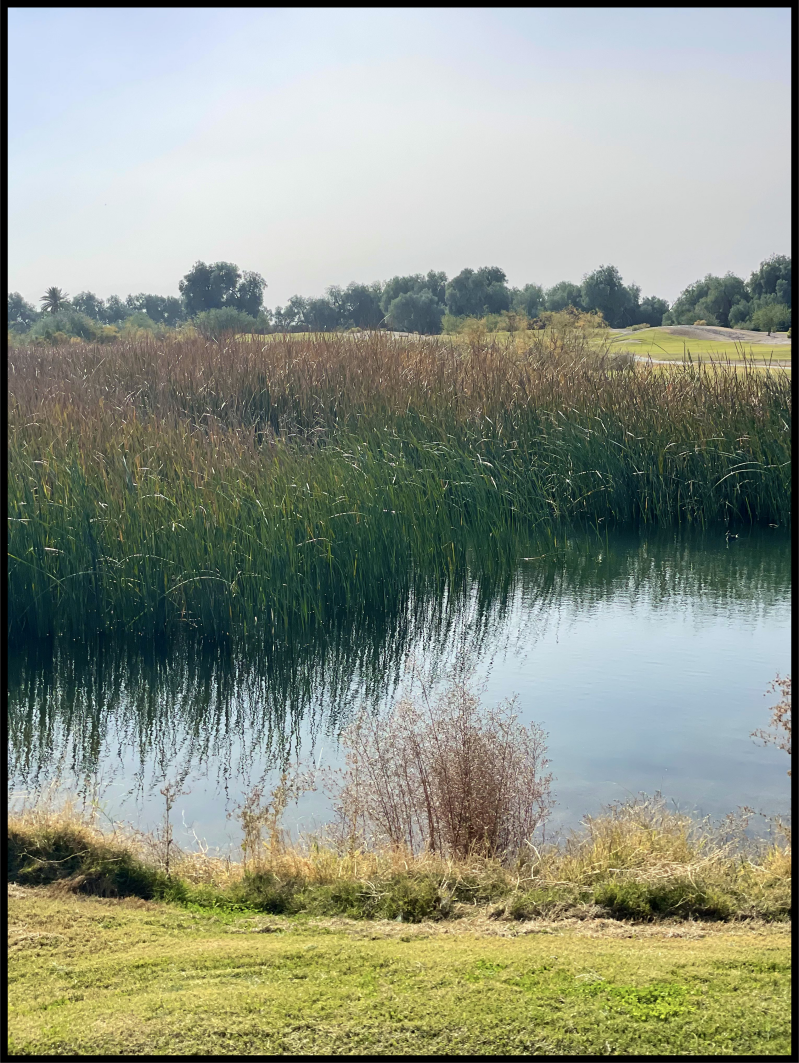
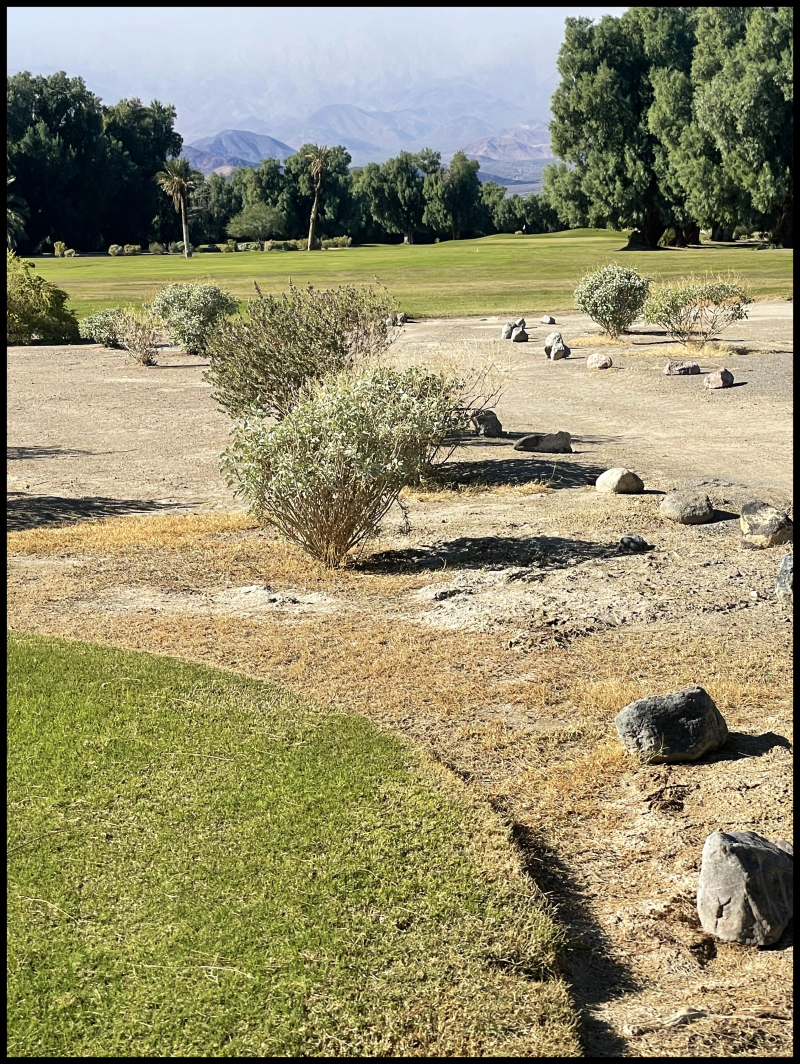
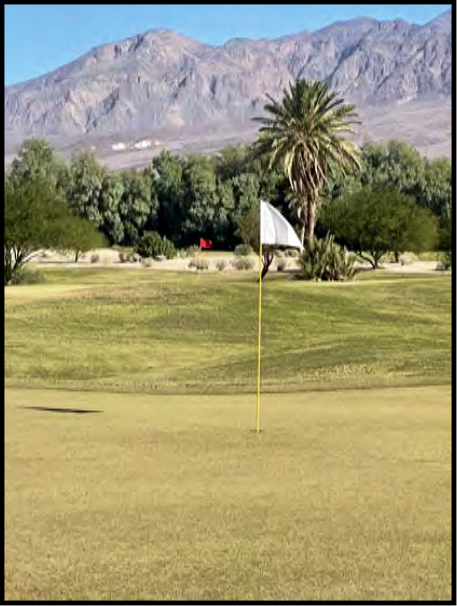
Furnace Creek opened in 1927 and feels like an oasis dropped into one of the harshest landscapes in America. Tall palm and tamarisk trees frame surprisingly green fairways, while the surrounding desert constantly reminds you that there really shouldn't be a golf course here at all.
That contrast is a big part of its charm.
At 214 feet below sea level, Furnace Creek is the lowest-elevation golf course in the United States. The air is slightly denser than at sea level, creating a little more aerodynamic drag on the golf ball. Temperature, humidity and other conditions also influence distance, so the effect isn't nearly as simple as applying a fixed percentage to every shot.
But on our day there, the ball certainly wasn't going anywhere.
A 150-yard 8-iron for me was traveling closer to 135–140 yards.
Whether it was elevation, temperature, conditions—or the golfer swinging the club—I quickly learned that the number on the yardage marker wasn't necessarily the club I normally associated with that distance.
It made club selection part of the fun.
Furnace Creek wasn't about spectacular architecture or championship pedigree. It was about the experience: two golfers, an empty course, palm trees, desert mountains and the novelty of standing more than 200 feet below sea level trying to figure out how far an 8-iron was actually going to fly.
That alone made it memorable.
Going High: Copper Creek
If Furnace Creek makes you feel like the golf ball doesn't want to go anywhere, Copper Creek gives it wings.
We flew into Denver and drove about 90 minutes into the mountains to Copper Mountain Resort. We happened to arrive on October 5, the final day of the golf season.
The resort was already changing personalities.
Chair lifts were being tested. Snowmaking equipment was being prepared. Lift-ticket machines were being readied for winter. Seven inches of snow would fall the night after we left.
And perhaps most importantly, everything in the golf shop was 70% off.
There are few things that can distract a golfer from an upcoming round quite like a 70%-off sign.
We arrived about an hour before our 10:30 tee time and found ice on the course, ice in the hitting nets and ice in the golf carts. The staff moved the carts into the sunshine, and by the time we teed off they had thawed nicely.
The golf course was another matter.
It was about 38 degrees when we started, and the greens on the front nine were extremely firm—"frozen" might be the more accurate description. Trying to hit and hold them was an adventure.
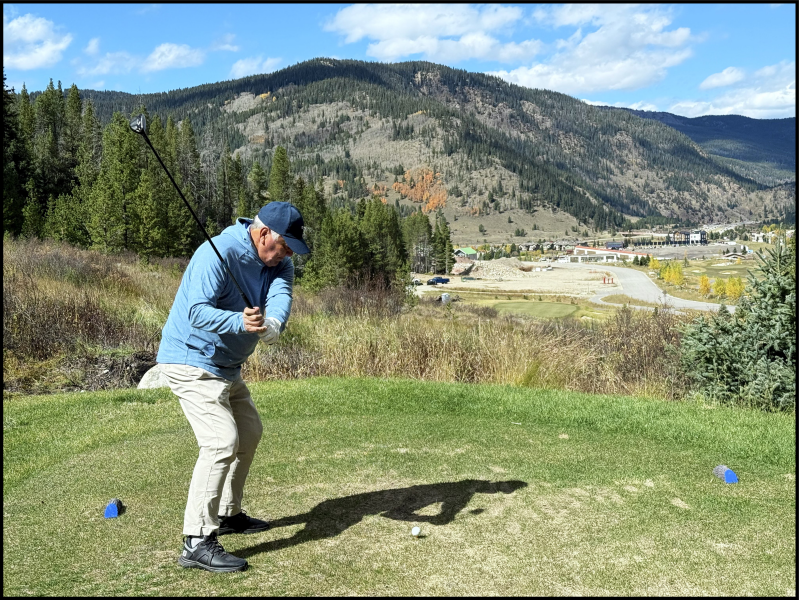
Designed by Pete and Perry Dye, Copper Creek winds through alpine meadows and stands of evergreens beneath the Tenmile Range. You'll find familiar Dye touches, including railroad ties and undulating greens. The front nine is relatively open; the back nine gets tighter, with more trees and larger elevation changes.


And then there are the par 3s.
The back nine alone has four of them, ranging from about 166 yards all the way to 249.
Normally that last number would get my attention.
At nearly 10,000 feet, however, golf becomes a different game.
The thinner mountain air produces considerably less drag on the golf ball, and shots can travel roughly 10–15% fartherthan they do near sea level. A 250-yard drive can suddenly become 275 yards or more.
For a golfer, this is tremendous fun.
You hit a drive, watch it climb into the mountain air and think:
Where has this been all my life?
Unfortunately, the same physics applies to approach shots.
More than once we watched a beautifully struck iron sail majestically toward the green…
…and keep going.
The cold temperatures reduced some of the altitude advantage, but elevation still won the battle. Once we adjusted, it became great fun trying to recalibrate our normal distances.
Nearly 10,000 Feet Apart
What I enjoyed most about playing Furnace Creek and Copper Creek wasn't that one was better than the other. They really aren't courses that need to be ranked against each other.
They are memorable because they sit at opposite ends of the American golf spectrum.
At Furnace Creek, we were surrounded by desert, standing below sea level and wondering why the ball wasn't traveling as far as expected.
At Copper Creek, we were surrounded by snow-covered mountains, almost two miles above sea level, watching shots hang in the air longer than we thought possible.
Furnace Creek compresses the game. Copper Creek stretches it out.
Same golfer. Same clubs. Same golf ball.
Nearly 10,000 feet of elevation between them.
And two completely different versions of the game.
That's one of the things I love about traveling to play golf. Sometimes the most memorable rounds aren't necessarily at the most famous courses. They're at places that give you an experience you simply can't duplicate anywhere else.
And playing golf from 214 feet below sea level to nearly 10,000 feet above it certainly qualifies.

Add comment
Comments